

A studio session in Havana is not the same experience as watching a band from a concert seat. During a past Havana Music Tours private visit, guests met the Abreu Brothers in a working musical setting. The value of that meeting was not simply being close to accomplished artists. It was having another way to understand their music, their working lives and the choices that shape a performance.
The same principle guides a well-planned festival evening, a conversation about a record, or an educational visit. A musician-led Cuba tour is built around people who know the music and can connect visitors with the artists, places and histories behind it. You do not have to be a musician yourself. Curiosity is enough to begin listening and learning.
At Havana Music Tours, founded in 2017, performing musicians, Cuban music specialists, educators, tour leaders and local guides bring different kinds of knowledge to the journey. Here is what those differences look like through actual HMT experiences and travelers’ own accounts.
At a festival, knowing what you are hearing changes the night
Jazz Plaza and Havana’s live music scene offer much more than a checklist of performances. Cuban jazz is shaped by many conversations: improvisation, Afro-Cuban rhythmic traditions, popular dance music, conservatory training, and the individual artistic paths of the performers. A knowledgeable host gives listeners a place to begin, whether that means recognizing a rhythmic idea, understanding an artist’s background, or knowing why a particular ensemble matters.

A returning HMT guest, Mark S, described how musicologist Rocío guided travelers through four nights of the Havana Salsa Festival, explaining the bands and their music. That included artists such as Issac Delgado, Alexander Abreu, Haila and Los Van Van. He wrote:
“Rocio is incredibly knowledgeable about Cuban music and Cuba in general.”
Mark S · March 2025 · Tripadvisor review
Mark’s account is useful because it describes more than event access. It shows the value of an informed person who stays with the group, answers questions and helps unfamiliar sounds and artists become part of a connected experience. Our Jazz Plaza feature explores the festival itself in greater depth.
The difference is the people beside you, not just the itinerary
A musician, a musicologist, a local guide and a tour leader are not automatically the same person. A professional performer can speak from experience about rehearsing and collaborating. A musicologist may explain repertoire, musical history and social context. A Cuban guide brings local knowledge of neighborhoods, cultural institutions and daily life. A tour leader looks after the group’s experience and coordination. Sometimes one person brings several strengths; on other programs, the work is shared.
HMT’s team reflects those distinctions. Ismelys Quevedo combines her musical background with guiding and local coordination. Other artists, educators and specialists contribute according to the program. It matters that each person is presented for what they actually know and do, rather than as a generic ‘insider.’
A different traveler, Dennis H, described how Ismelys connected with a family group that included musicians and a composition student. His short observation gets at something important:
“she spoke our language!”
Dennis H · August 2023 · Tripadvisor review
This is also why the right group leader changes the questions travelers feel comfortable asking. A visitor who plays can ask about technique or collaboration; someone without musical training can ask where a song comes from or why people dance to it in a particular way.
Hear directly from a traveler
A written review can describe an encounter, but hearing someone talk about it adds another layer. In the HMT video below, a traveler reflects on the experience of playing with Cuban musicians. We have embedded the original Instagram testimonial so the guest’s own voice is part of the article rather than asking readers to follow an external link.
Learning with working artists, in working spaces
A concert audience hears the finished performance. A smaller musical encounter can also reveal how a group listens and responds to itself. A private ensemble performance, rehearsal visit or educational exchange can create room to discuss instruments, arrangements and the musicians’ different roles, provided the artists and setting permit it.
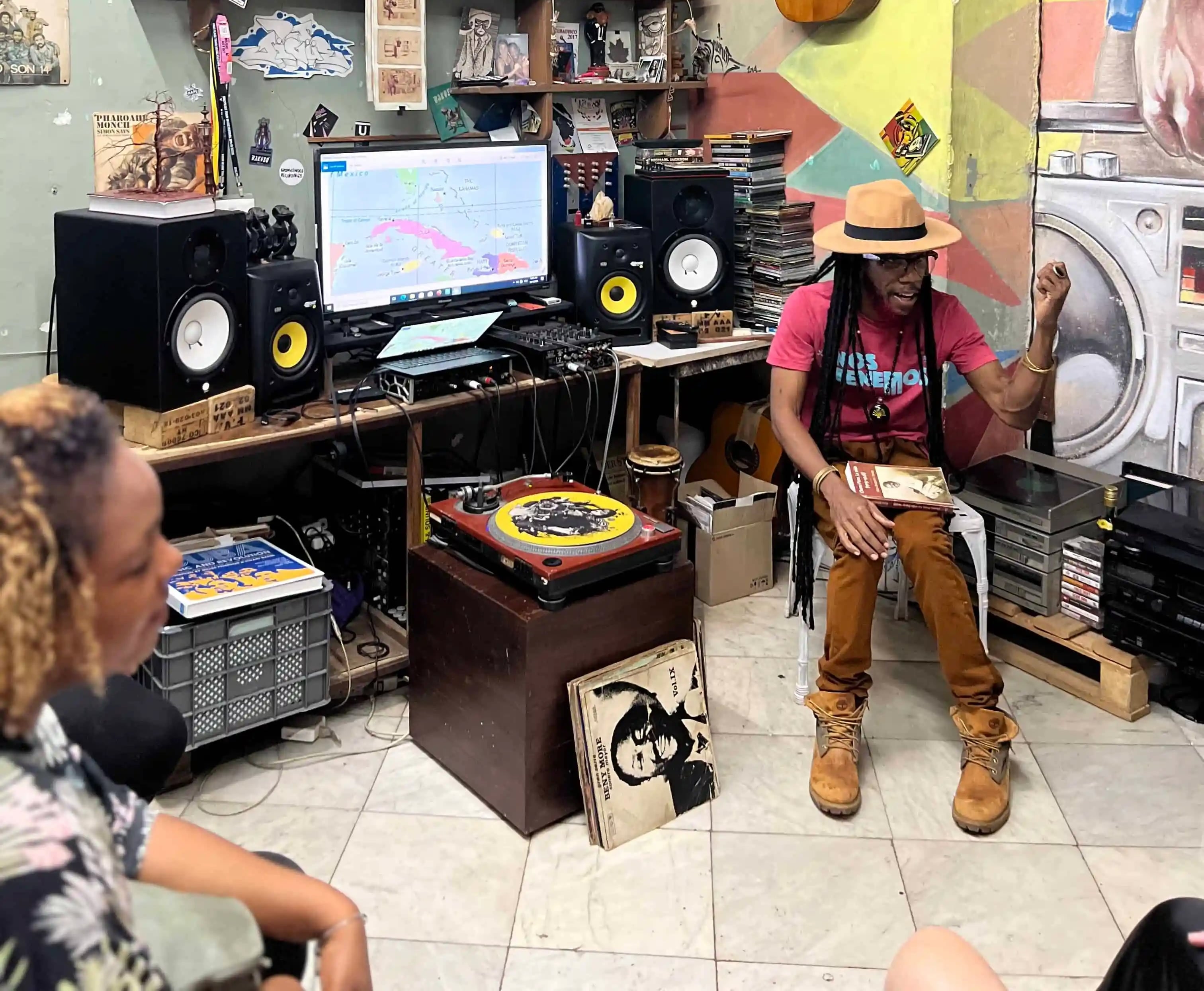
During a past HMT studio visit in November 2023, guests spent time with the Abreu Brothers. Another documented encounter paired travelers with producer DJ Jigüe for a music-history and vinyl-listening experience. These are distinct ways of encountering musical practice: one through live collaboration, another through records and how a producer hears them.
The HMT recording below captures a jazz quintet playing for a group at Restaurant Atelier in January 2024. The intimate scale lets viewers follow the individual instruments and the musicians’ interplay. It is an example of a past visit, not a promise of a specific artist or venue on every departure.
What the guests actually say about our musicians and guides
The strongest evidence for our approach comes from travelers who have experienced it. Their accounts repeatedly connect musical knowledge with personal attention and relationships. These are brief, directly attributed excerpts, with links to the original reviews for fuller context.
“The artists we worked with weren’t just immensely talented—they were generous, warm, and deeply inspiring to our students.”
JP B, musician and educator · August 2025 · Tripadvisor review
JP B traveled with a group of student musicians and families. Their program included professional lessons, concerts and collaborative educational encounters, including work with musicians in Matanzas. That experience deserves a mention, but it is one part of a wider program. For the full story of that tradition, see our separate rumba in Matanzas article.
“It was a journey where one does not feel like a spectator, but part of the environment.”
Ed Peláez · December 2025 · Tripadvisor review
Ed’s account focused on introductions to musicians, conversations and genuine human contact, not only on the number of scheduled stops. Another guest who traveled for the 2026 Salsa Festival described a similar feeling at the end of the week:
“I feel like I’ve left some very good friends behind – friends I didn’t have a week ago.”
Joseph, Havana Salsa Festival guest · March 2026 · Tripadvisor review
That is a more meaningful measure of the experience than how many performances fit into one week. It says something about the people hosting the visit and the space they create for visitors and Cuban collaborators to meet. Our reviews page also displays a broader live Tripadvisor review feed so readers can explore more traveler accounts without relying on our selection alone.
Musical education can be part of a travel experience
Not every visitor comes with the same background. Some are musicians or music students, while others have never taken a lesson. Our documented programs have included visits to Cuban music schools and encounters with educators. In these settings, music becomes a subject to learn about together, not simply an evening’s entertainment.
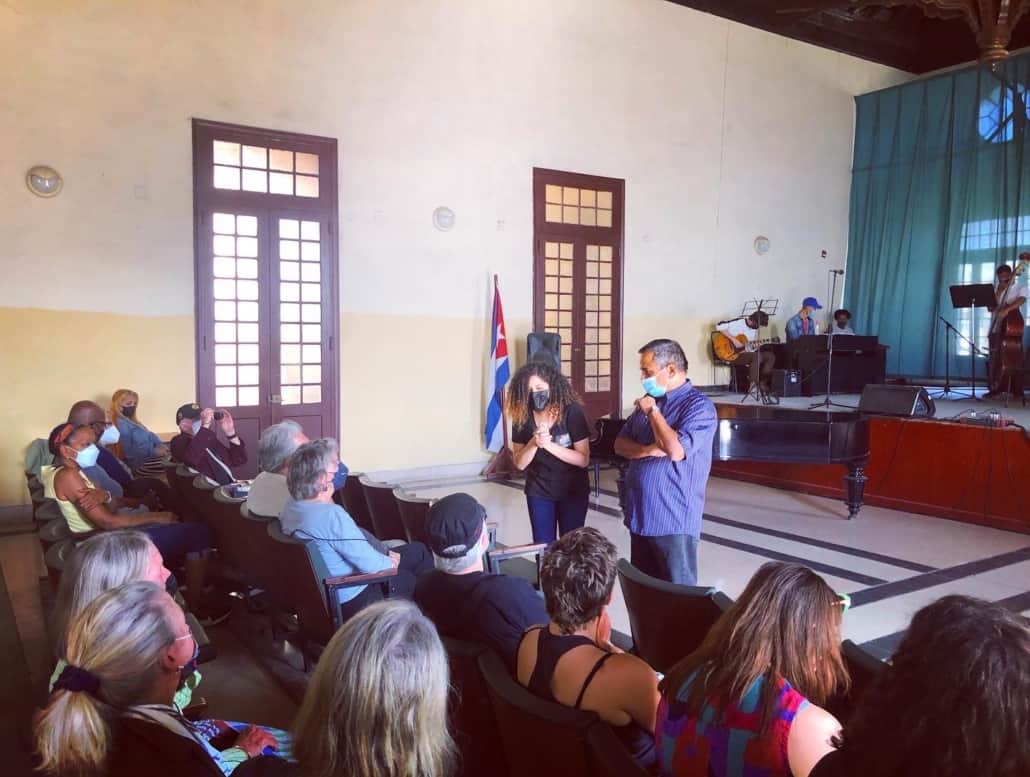
A traveler may be drawn to jazz, timba, son, Afro-Cuban percussion or contemporary recorded music. These traditions are not interchangeable; each has its own artists, rhythms, social history and audiences. The job of a good host is to help people follow their curiosity without flattening all of Cuba into a single sound.
So what should you look for in a Cuba music tour?
Ask who will actually lead each part of the experience. Will there be a musician or music educator when the itinerary calls for one? Does the program include time to ask questions? Are local artists and independent cultural professionals treated as collaborators? Can the team explain how the concerts, lessons, history and daily experiences fit together?
At Havana Music Tours, that combination is what we strive to design. Individual musicians, venues, lessons and visits depend on the specific itinerary and confirmed arrangements. We explain our work with independent artists and hosts further in our Support for the Cuban People article.
A note for U.S. travelers: A music-focused journey is not itself an authorization for tourist travel to Cuba. U.S. travelers must qualify under an applicable OFAC travel authorization and follow its conditions. Those relying on the Support for the Cuban People general license must each engage in a full-time schedule of qualifying activities that enhance contact with Cuban people, support civil society, or promote independence from Cuban authorities, and result in meaningful interactions. Concerts, lessons, and individual cultural visits do not by themselves establish that a trip qualifies. Current restrictions on prohibited accommodations and direct or indirect transactions with entities on the Cuba Restricted List must also be observed. For details, consult OFAC’s official guidance and our Cuba travel-compliance guide.
If music is part of why you want to understand Cuba, explore our Cuba music tours or tell us what artists, traditions or experiences interest you. A good conversation is where the itinerary begins.
For a broader explanation of tour leaders, local guides and musical specialists across destinations, see our sister company’s guide to musician tour leaders.