
In November 2023, Havana Music Tours guests visited Guámpara in Havana for an experience with Cuban producer DJ Jigüe. The photographs from that visit tell two parts of one story: a music-history and vinyl-listening session with the artist, and a table laid out for an Afro-Caribbean lunch. Behind those moments were people sharing specialized knowledge, preparing food, and hosting the group. It is a useful place to begin a conversation about what it means to support Cuban people through travel.
For U.S. travelers, Support for the Cuban People is also a legal term: an OFAC general license with specific requirements. For us, the challenge is to connect those requirements with a thoughtful program in which Cuban musicians, teachers, guides, independent hosts, and other local professionals are active participants. Their expertise, work, and perspectives should shape the trip, not merely appear in the background.
Questions about travel to Cuba often begin with permission: Can Americans still go? What does the license allow? But there is another important question: what will a traveler actually do, and with whom? As Cuba’s independent businesses navigate changing conditions, it is worth looking beyond the legal label to the relationships and activities that make a cultural itinerary meaningful.
What is the “Support for the Cuban People” general license?
The U.S. Treasury Department’s Office of Foreign Assets Control (OFAC) regulates travel-related transactions involving Cuba. Travel to Cuba solely for tourism remains prohibited for people subject to U.S. jurisdiction. But certain travel is authorized under specified categories, including Support for the Cuban People, found in 31 CFR § 515.574.
This is a general license. Someone whose travel meets all of its conditions generally does not need to apply to OFAC for an individual authorization letter. What matters is whether the traveler’s real activities and transactions actually fit the regulation, not whether a travel company puts the words on a brochure. A Cuban eVisa is a separate entry requirement; it is not an OFAC travel authorization.
OFAC requires each traveler using this category to follow a full-time schedule of qualifying activities that enhances contact with the Cuban people, supports civil society, or promotes the independence of the Cuban people from Cuban authorities, with meaningful interaction with individuals in Cuba. Time devoted to recreation must remain consistent with that full-time program. An entire group is not automatically covered because a guide, organizer, or some of its members qualify.
Choosing a privately owned casa particular or paladar can be part of an authorized trip. But staying in a private guesthouse, eating at private restaurants, making donations, or attending concerts does not, by itself, satisfy the full-time activity requirement. The substance of the itinerary matters. Under 31 CFR § 501.601, the current OFAC recordkeeping period for covered travel transactions is at least 10 years. The ten-year rule took effect in March 2025, although some older OFAC Cuba travel FAQ pages still refer to five years. For broader legal background, see our current guide to U.S.–Cuba travel rules.
The people behind a Cuba music itinerary
When we design a music-focused trip, we think about the people doing the teaching, performing, guiding, hosting, cooking, driving, and creating. They are not interchangeable parts of an excursion. Each brings knowledge and work that deserves to be recognized and compensated.
Consider a musician-led session in Havana. Guests are not only there to hear a performance. The strongest exchanges create time to discuss a musician’s training, the rhythms or arrangements being demonstrated, the practical work of composing or teaching, and what it takes to sustain independent creative activity in Cuba. An artist’s time and expertise become a paid part of the program rather than an incidental attraction.
A similar principle applies beyond the music. A private host earns income from accommodation and guest services. A local guide brings knowledge of the city and its cultural history. A privately run restaurant purchases ingredients and employs staff. A farm visit can connect travelers with the producers and people responsible for the food. These relationships involve real transactions and real work, although the precise benefit depends on the people, business arrangements, and activities involved.
That is the economic side. The human side is just as important. A meaningful exchange gives visitors the opportunity to listen, ask informed questions, and understand Cuban people as working artists, teachers, business owners, and community members, not simply as the scenery surrounding a holiday. None of these individual transactions is a legal shortcut: they must form part of an itinerary that meets OFAC’s full requirements.

A studio session is part of a musician’s working life
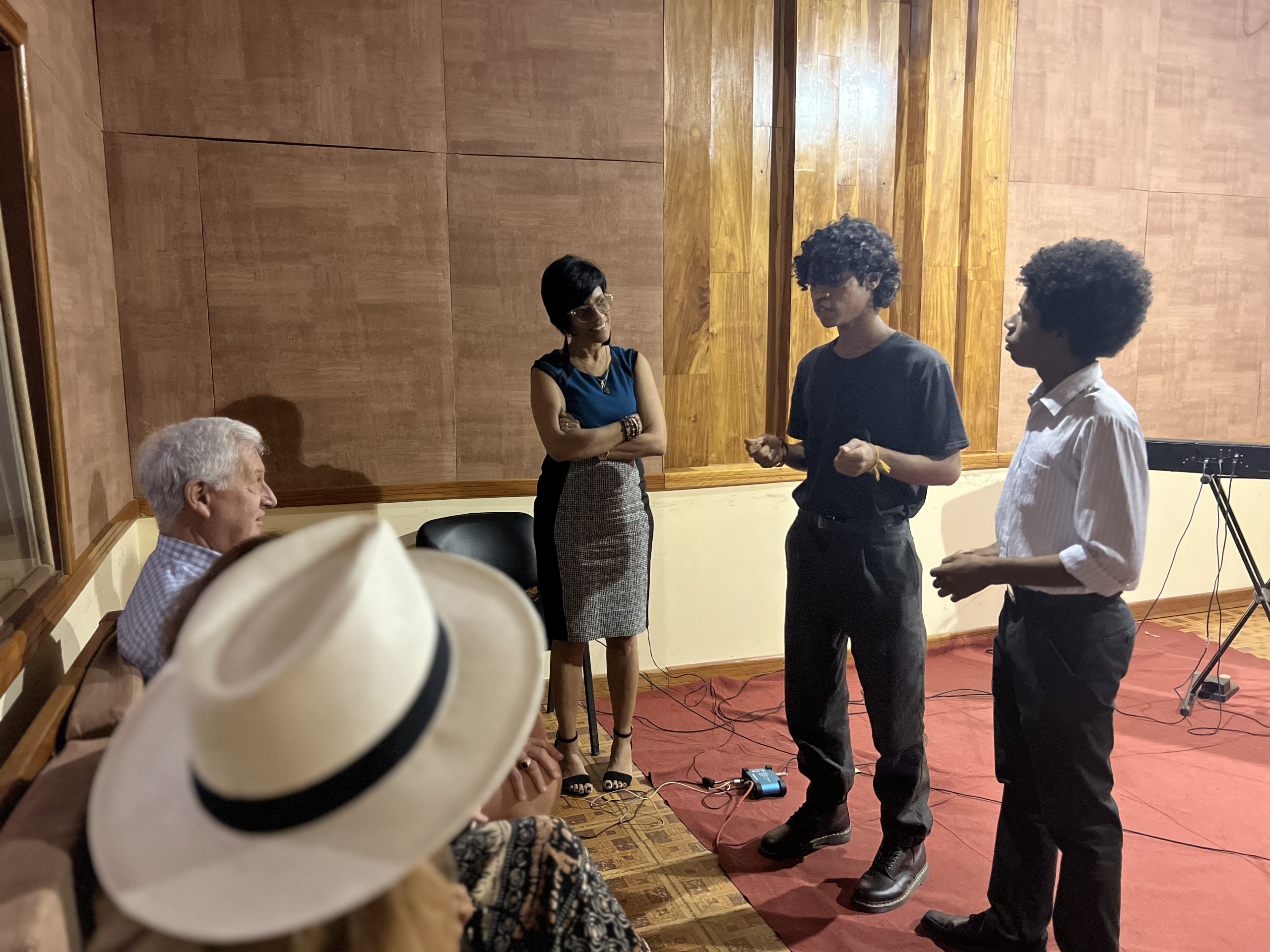
Another HMT private tour in November 2023 included a live studio session with the Abreu Brothers. In the photographs from that visit, musicians and guests share the same working space. The point of such an encounter is not to make the artists into an attraction. It is to recognize the preparation, technique, creative decisions, and professional time behind the music, and to give travelers room to learn directly from the people making it.
That kind of exchange changes what a visitor takes away. Hearing a finished performance is one experience; meeting the people responsible for it can lead to questions about their instruments, musical education, composing, recording, and how they build their careers. The musician leads that conversation as a professional, and the program should value their contribution accordingly.
What an exchange can leave with students
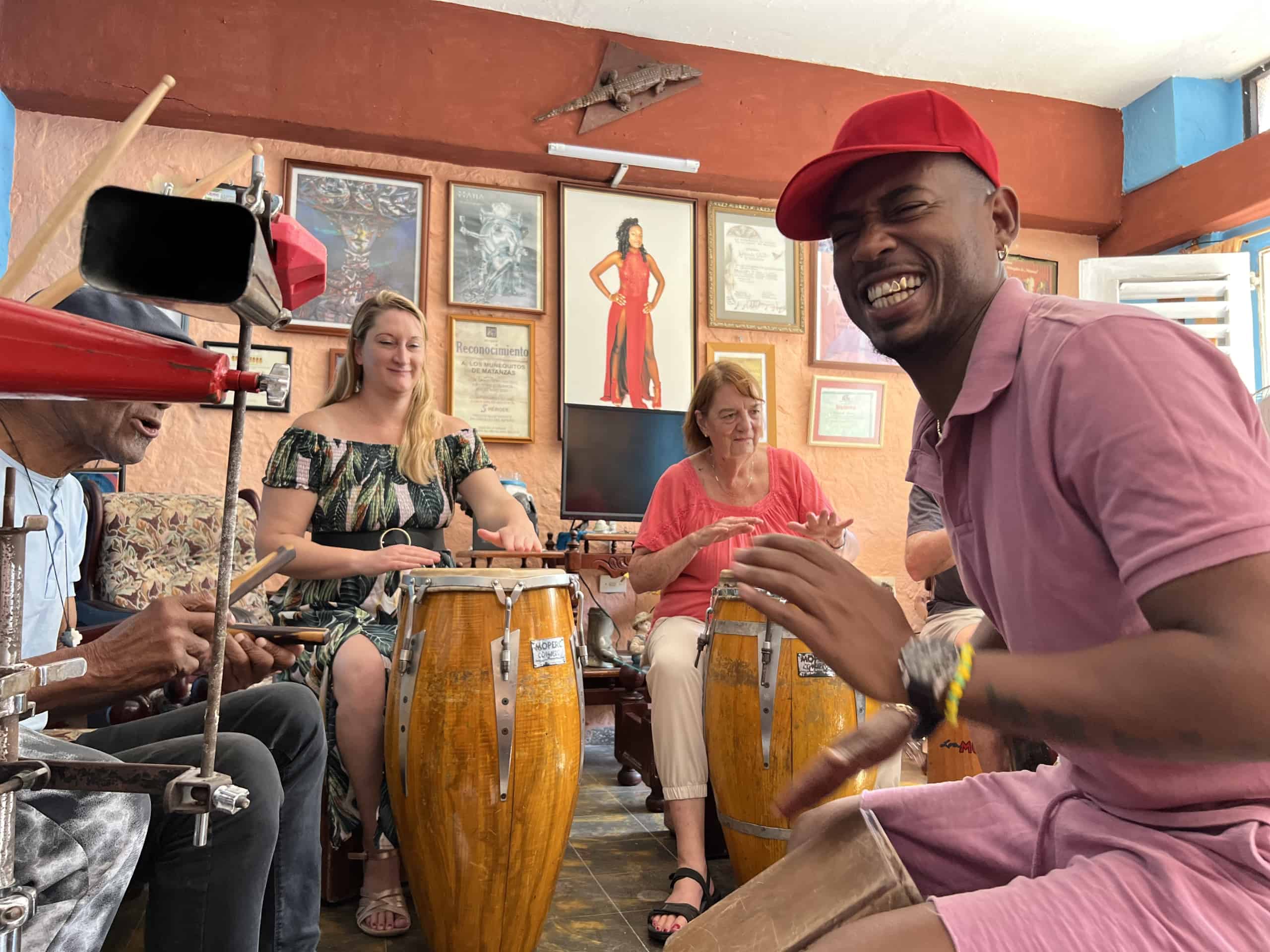
A traveler’s review of an HMT educational program in 2025 describes young visiting musicians taking lessons and playing with Cuban artists, including a collaboration in Matanzas with percussionists from Los Muñequitos and a student jazz ensemble. That is a different relationship from watching a show: learning and performing together allow both groups to contribute something to the encounter. We share this as a documented past experience, not as a promise of specific artists on a future departure.
Support is not a single receipt or a photo of a donation. It can also mean paying educators for their time, planning activities around their expertise, and treating local knowledge as something visitors have come to learn from.
How this approach appears in our 2027 tours
Our public itineraries are built around direct engagement with Cuban musicians, music educators, guides, hosts, and independent businesses. Each departure has a different musical focus. The examples below describe planned or previously documented experiences; artists, venues, suppliers, and the final qualifying program are confirmed for the specific departure.
Havana Jazz Festival Tour | January 26–February 1, 2027
Our seven-day Jazz Plaza journey combines festival performances with a musicology-led studio conversation, a planned music-school or conservatory visit, a day exploring rumba’s traditions in Matanzas, and a visit to Finca Tungasuk. The sample program also includes a private community jam session designed with independent Cuban musicians and a privately operated venue, creating paid work for participating artists.
Jazz Plaza gives the week an extraordinary musical center. Our daytime program is designed to connect what guests hear in concert halls with the people and musical traditions behind it: conversations with artists, opportunities to learn from educators, and visits with independently working Cubans. The complete daily itinerary is developed around the applicable OFAC requirements, while festival schedules and artist availability remain subject to change.
Video: a Havana Jazz Festival experience featured on our tour page.
Havana Music & Cultural Tour | Six departures from January to June 2027
Our five-day Havana Music & Cultural Tour lists departures for January 11–15, February 8–12, March 8–12, April 12–16, May 10–14, and June 7–11, 2027. The sample itinerary connects independent local guides and creative spaces with a music-history and vinyl-listening session with DJ Jigüe, a dance or instrument lesson, a home-prepared lunch, and a guided visit to Finca Tungasuk.
Here, a guided listening session is a chance to understand how Cuban music circulates and changes. Lessons acknowledge the specialist knowledge of teachers and performers. Meals and farm visits can bring travelers into conversation with people who prepare food and sustain private enterprises. The final confirmed daily program must still meet the full-time OFAC standard; meals, shopping, and leisure alone do not establish eligibility.
Cuban Jazz & Rumba Tour | April 28–May 3, 2027
Our six-day Cuban Jazz & Rumba Tour brings together Havana’s contemporary jazz scene and Matanzas’s deep rumba history. Around April 30, International Jazz Day, the sample program includes a private studio performance and discussion with Cuban musicians. In Matanzas, it plans an exchange with local music specialists and a rumba workshop-performance, subject to the artists’ schedules.
That combination is intentional. Jazz and rumba are connected through musicians, history, rhythmic ideas, and ongoing creative practice, not just through what happens onstage. A respectful, specialist-led conversation can help guests understand those connections while directly valuing the people who teach and perform them.
Hear the people and music behind our trips
These are performances recorded by Havana Music Tours on earlier trips and at earlier events. They are not announcements of artists booked for 2027. They show the musical work and relationships that have informed our approach over the years.
A Cuban jazz quintet in Havana, January 2024
This recording from our 2024 Jazz Plaza visit features a quintet performing for an HMT group at Restaurant Atelier. The musicians identified in our video archive are trumpeter Alejandro Delgado, drummer Oliver Valdés, bassist Jorge Reyes, pianist David Alfaro and percussionist Tomás Ramos, “El Panga.”
“Chan Chan” by Changüí de La Maya in Santiago de Cuba, 2023
Recorded by Havana Music Tours in Santiago de Cuba in April 2023, this performance of “Chan Chan” by Changüí de La Maya brings the musical traditions of eastern Cuba into the story. It offers a different perspective from the jazz performance above and a reminder that Cuban music cannot be reduced to one city or style. Listening to musicians across the island helps us understand how different traditions are carried forward and reinterpreted.
What changed in U.S. rules in September 2026?
OFAC’s September 30, 2026 amendments ended the former general authorization for new group people-to-people educational travel, subject to limited grandfathering for certain earlier arrangements. That change did not eliminate the separate Support for the Cuban People category in § 515.574. Travelers must choose the category that genuinely matches what they will do, and comply with its particular conditions. OFAC explains the educational-travel changes here.
The same regulatory changes also expanded restrictions affecting indirect as well as direct financial transactions with entities on the Cuba Restricted List. Prohibitions concerning listed accommodations remain important too. This makes supplier due diligence and the structure of payments and reservations especially significant, even when a program primarily works with independent Cuban businesses. Read OFAC’s September 2026 restricted-entity guidance for the details.
Beyond the trip: The CreatiVrole Project
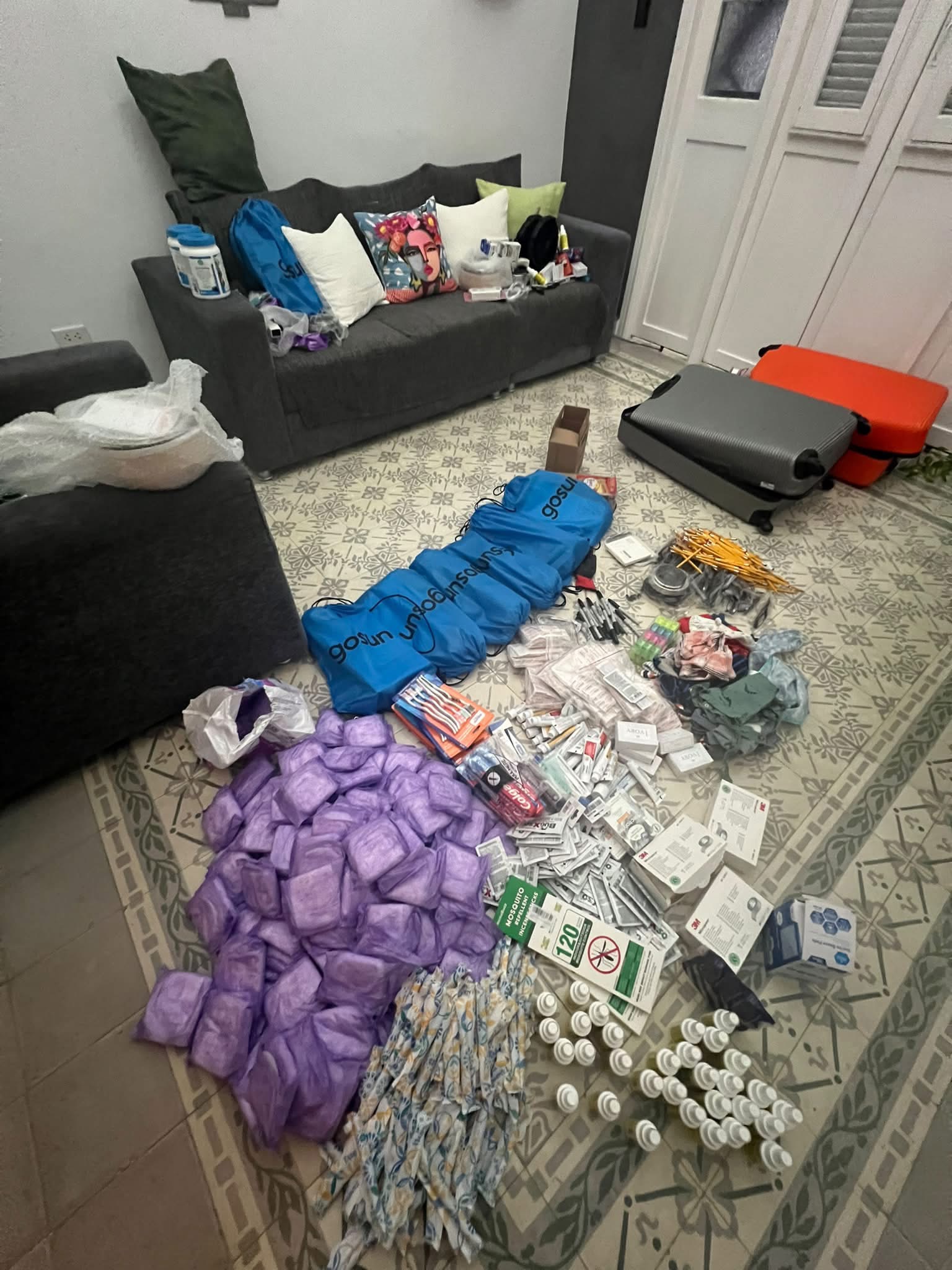
Relationships with Cuban musicians, educators and independent hosts have raised questions that a travel itinerary alone cannot answer. What happens when a teacher needs instrument parts to keep lessons going, when a musician needs basic recording tools, or when a rehearsal space lacks dependable power? Those are practical needs that shape whether creative work can continue. They are part of the reason The CreatiVrole Project was established as a separate Colorado 501(c)(3) public charity.
The nonprofit focuses on community-informed needs: instruments and replacement parts, music-education materials, recording tools, computers, practical equipment, and resources for teaching, rehearsing or gathering. The goal is not to arrive with an arbitrary box of supplies. It is to understand what people have requested, coordinate an appropriate response, and document the work responsibly. Where practical, the project aims to purchase locally and work with local partners.
In an October 2026 firsthand update, Chaz Chambers described the nonprofit’s humanitarian work during a visit to Havana, Matanzas and the countryside. He wrote about helping more than a hundred people and families in small, practical ways, while being candid about the difficult conditions he encountered. His larger point was that emergency help and longer-term opportunities are both needed: people also need the ability to work, teach, create and operate their own businesses.
Havana Music Tours contributes 5% of tour revenue to The CreatiVrole Project. That is a contribution by our company, not an additional charge or required donation from travelers. The nonprofit has its own charitable purpose and accountability; the tour has its own program, suppliers and legal requirements. One should not be presented as a substitute for the other.
The connection is the continuity of the relationships. A visit may introduce travelers to a musician or educator for the first time, but that person’s needs and work do not begin or end with a group’s arrival. The nonprofit is one way to support specific community requests beyond a particular departure, with decisions guided by local priorities rather than assumptions made from afar. Readers can learn more about The CreatiVrole Project, its programs and ways to participate separately from booking a tour.
Four useful questions to ask before choosing a Cuba tour
What will I actually do each day? Ask for a substantive schedule, not only a list of famous sights, restaurants, and concerts.
Whom will I engage with? Find out what role local musicians, educators, hosts, guides, and other independent Cubans have in the program, and how guests participate.
How are suppliers and transactions reviewed? An operator should be able to explain its approach to restricted entities, accommodation screening, and the way the program is arranged.
What records will I receive and retain? Keep your daily itinerary, records of qualifying activities, and relevant travel and transaction documentation for at least 10 years under current OFAC rules. Keep records that reflect what you actually did, not just the activities originally scheduled.
Travel can create opportunity, when the itinerary is built around people
Cuba’s musicians, teachers, hosts, and entrepreneurs are not passive beneficiaries waiting for visitors. They are already doing the work of sustaining their businesses, art, knowledge, and communities under difficult circumstances. Thoughtful travel can give that work another audience and a source of income, while making space for genuine conversation across borders.
That is what we want travelers to understand about Support for the Cuban People: the legal framework matters, the details matter, and the people whose work shapes the experience matter most. Our responsibility is to make the purpose of each trip visible in its itinerary, not just in its name.
Explore our 2027 Cuba music tours, or contact Havana Music Tours to discuss a departure and request the detailed program before making travel plans.
Travel information reviewed October 27, 2026. This article is general information, not legal advice. U.S. regulations, individual eligibility, local operations, and tour schedules can change. Consult current OFAC guidance and an appropriately qualified professional where needed.